
ACCREDITATION

About the Journal
Ar-Ribh : Jurnal Ekonomi Islam [p-ISSN 2684-7477 |e-ISSN 2714-6316] published by the Islamic Economics Study Program of the Faculty of Economics and Business, Muhammadiyah University of Makassar, this journal publishes research articles in the field of Islamic Economics. This journal publishes research studies that use a variety of qualitative and / or quantitative methods and approaches in the field of Islamic Economics. This journal aims to develop concepts, theories, perspectives, paradigms, and methodologies within the scope of Islamic Economics published twice a year, namely April and October.
Ar-Ribh : Jurnal Ekonomi Islam have been singgle reviewed by peer reviewers. The decision to accept or not accept scientific articles in this journal is the right of the Editorial Board based on recommendations from peer reviewers. Please read and understand the author's guidelines thoroughly. Authors who submit manuscripts to the editor of Ar-Ribh : Jurnal Ekonomi Islam must comply with the author's guidelines. If the submitted manuscript does not comply with the guidelines or uses a different format, the manuscript will be rejected by the editorial team prior to review. The Editorial Team will only accept manuscripts that meet the specified format requirements format.
Focus and Scope
The scope of the journal covers, the following topics: Islamic banking and finance; Sharia-compliant financial products, such as murabahah, mudharabah, musyarakah, and ijarah; Islamic capital markets and investment instruments; Islamic microfinance and financing for SMEs; zakat, waqf, and Islamic philanthropy; Sharia auditing and Islamic accounting; halal industry economics; Islamic economic jurisprudence (fiqh muamalah); digital transformation in Islamic finance; comparative studies of Islamic and conventional economic systems; and ethics and values in Islamic economics.
List of Invoice Journal Visitor Countries
Indexing and Abstracting


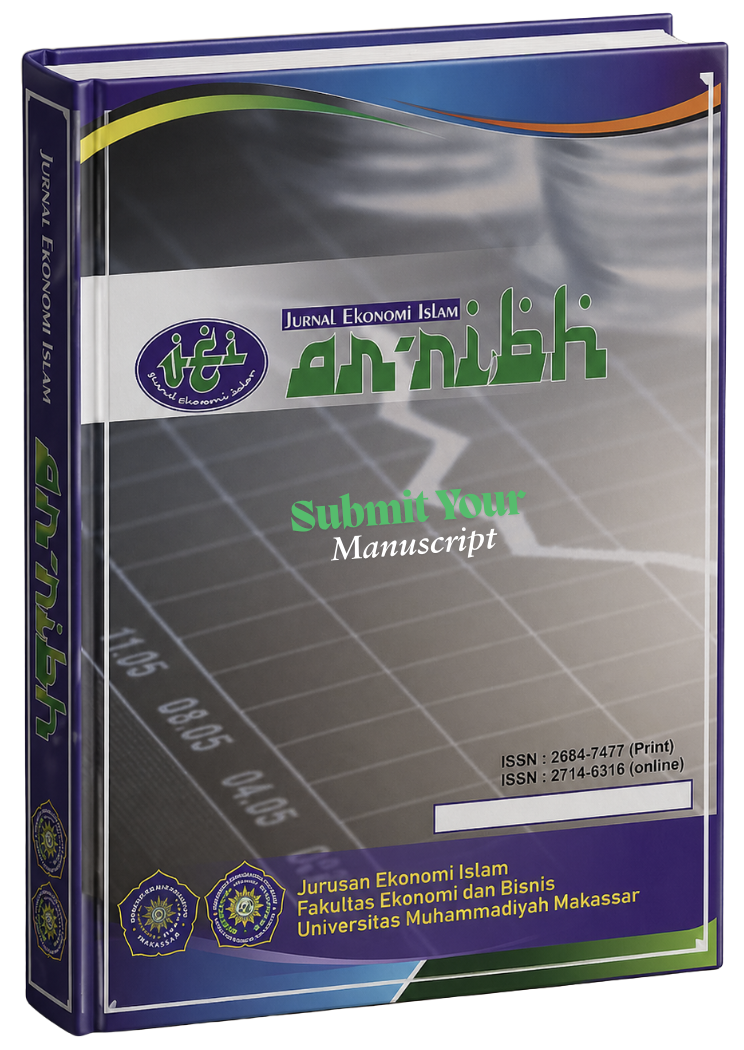
Ar-Ribh: Jurnal Ekonomi Islam [p-ISSN 2684-7477 | e-ISSN 2714-6316] is published by Muhammadiyah University of Makassar. This journal publishes research articles in the field of Islamic Economics, covering studies that apply a variety of qualitative and/or quantitative methods and approaches. It aims to develop concepts, theories, perspectives, paradigms, and methodologies within the scope of Islamic Economics. The journal is published twice a year, in April and October. The authors contributing to this journal come from various countries, including Indonesia 🇮🇩, India 🇮🇳, Malaysia 🇲🇾, Thailand 🇹🇭, and South Africa 🇿🇦, reflecting its international academic collaboration and diverse scholarly perspectives in the field of Islamic Economics.
ACCREDITATION
AKREDITASI
REFERENCE TOOLS


LANGUAGE TOOLS


PLAGIARISM CHECK


e-ISSN and p-ISSN


StatCounter



Address: Jl. Sultan Alauddin No. 259, Makassar 90221, Sulawesi Selatan, Indonesia
© 2018 The Authors. Published by Universitas Muhammadiyah Makassar. All rights reserved.
This is an open-access article distributed under the terms of the Creative Commons Attribution-ShareAlike 4.0 International License (CC BY-SA 4.0)