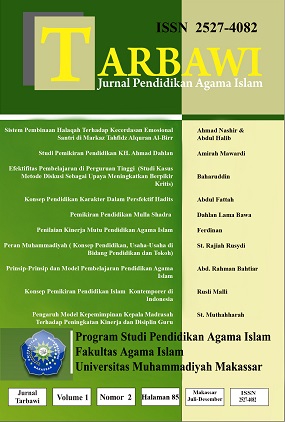
EFEKTIFITAS PEMBELAJARAN DI PERGURUAN TINGGI (STUDI KASUS METODE DISKUSI SEBAGAI UPAYA MENINGKATKAN BERPIKIR KRITIS)
DOI: https://doi.org/10.26618/jtw.v1i2.363
Abstract
penelitian ini bertujuan untuk mengembangkan efektivitas belajar di perguruan tinggi (studi kasus; diskusi sebagai upaya untuk meningkatkan siswa berpikir kritis di Universitas Muhammadiyah Makassar). Kemampuan diskusi sebagai upaya untuk meningkatkan mahasiswa berfikir kritis, sedangkan menciptakanketerampilan untuk mengantisipasi perubahan global. Penelitian ini menggunakan pendekatan deskriptif kualitatif dengan metode studi literatur, wawancara dan observasi pada mahasiswa Universitas Muhammadiyah Makassar. Hasil penelitian ini menunjukkan bahwa metode diskusi pembelajaran adalah salah satu metode yang disukai. Karena dalam model pembelajaran abstracles, dosen harus profesional dalam mengembangkan metode diskusi untuk mengekspresikan kemampuan mereka, berpikir kritis, menilai perannya dalam diskusi, melihat masalah dari pengalaman dan pelajaran sendiri pelajari. Berdasarkan temuan faktual penelitian ini, ditemukan diskusi sebagai siswa sangat membutuhkan pemeriksaan kritis yang tepat untuk meningkatkan kompetensi dan mahasiswa profesional.Kata Kunci: Efektfitas Belajar, Diskusi ABSTRACTThis research is aimed to develop the effectiveness of learning in college ( A case study methods discussion as an attempt to improve the critical thingking students Muhammadiyah Univercity of Makassar). The ability of discussion as an attempt to improve the critical thingking students, whereas creating skill to anticipate the global change. This research applied qualitative description approach with literature study method, interview and observation students muhammadiyah university og makassar. The results of this study indicate that the discussion method of learning is one method favored. In this way due to the learning organization abstracles lecturers should be professional in developing the method of discussion to express their ability, critical thinking, assessing its role in the discussion, looking at the problem from his own experiences and lessons learned. Based on the factual findings of this study, it was found the discussion as students desperately need critical examination is right for increased competence and professional students.
Keywords: Learning Affectivities, Discussion
References
Arikunto, H. Manajemen Pengajaran Secara Manusiawi. Jakarta: PT Rineka Cipta, 1990.
Dakir, H. Perencanaan dan Pengembangan Kurikulum. Jakarta: PT Rineka Cipta, 2004
Dimyati, Mujiono. Belajar Dan Pembelajaran. Jakarta: PT Asdi Mahasatya.
Harjanto. Perencanaan Pengajaran. Jakarta: PT. Rineka Cipta, 2000
Nasution. Asas-asas Kurikulum. Bandung: Jemmars, 1982
Peter Senge, The Fifth Discipline, New York, London Toronto, 1990
Phillip H. Coombs, System Thingking, Oxford University Press, 1970
Sadiman, Arif, dkk. Media Pendidikan: Pengertian, Pengembangan dan Pemanfaatannya. Jakarta: PT. Raja Grafindo Persada, 1996s
Semiawan, Cony., dkk. Pendekatan Ketrampilan Proses, (Bagaimana
Meningkatkan Siswa Dalam
Belajar. Jakarta: PT Gramedia, 1985
Sudrajad, Hadi. Implementasi Kurikulum Berbasis Kompetensi. Bandung: CV.Cipta Cekas Grafika, 2004
Syah, Muhibin, Psikologi Pendidikan Suatu Pendekatan Baru. Bandung: Remaja Rosdakarya, 1995
Downloads
Published
Issue
Section
License
In the event that an article is accepted by the Editorial Team of TARBAWI: Jurnal Pendidikan Agama Islam, registered under ISSN 2527-4082 (Print) and ISSN 2622-920X (Online), and a decision is made to publish the article, the copyright of the article remains with the author(s).
The Islamic Religious Education Study Program, Faculty of Islamic Studies, Universitas Muhammadiyah Makassar, as the publisher of TARBAWI: Jurnal Pendidikan Agama Islam, holds the publication rights for all articles published in this journal.
The Islamic Religious Education Study Program, Faculty of Islamic Studies, Universitas Muhammadiyah Makassar, as the publisher of TARBAWI: Jurnal Pendidikan Agama Islam, registered under ISSN 2527-4082 (Print) and ISSN 2622-920X (Online), has the right to reproduce and distribute the articles, and the author(s) are not permitted to publish the same article elsewhere once it has been published in this journal.
The Statement of Originality and Copyright Form can be downloaded
: here
After completing the statement form, please send it via email to: jurnaltarbawipai@gmail.com